The First Thing You Notice When You Open a Pre-Loved Bag
It hits you before you even look inside.
Before you check the stitching, before you run your thumb along the hardware, before you hold it up to the light to read the serial number — there’s a smell. And if you’ve ever held a truly vintage bag, you know exactly what we mean. It’s not quite leather, not quite perfume, not quite time. It’s all three, folded into each other, and it stops you cold.
At Plamexs, we open a lot of bags. Thousands a year. And that first breath — the one that comes when you unclasp a flap that hasn’t been opened in years — never gets old. Because every single one is different.
Why Leather Smells the Way It Does
Leather is not inert. It’s a material that keeps reacting long after it’s been tanned, dyed, and stitched — to temperature, to humidity, to the oils in your hands, to the contents of your bag, to the air in every room it’s ever been in.
Vintage leather — leather from the 1980s, 90s, early 2000s — smells different from leather made today, and not just because it’s aged. The tanning processes used decades ago were different. Many vintage luxury houses used vegetable tanning or chrome tanning methods that have since been updated or replaced.
The Layers You’re Actually Smelling
When you lift a pre-loved bag to your face — and yes, we all do it — what you’re actually encountering is a kind of accidental archaeology.
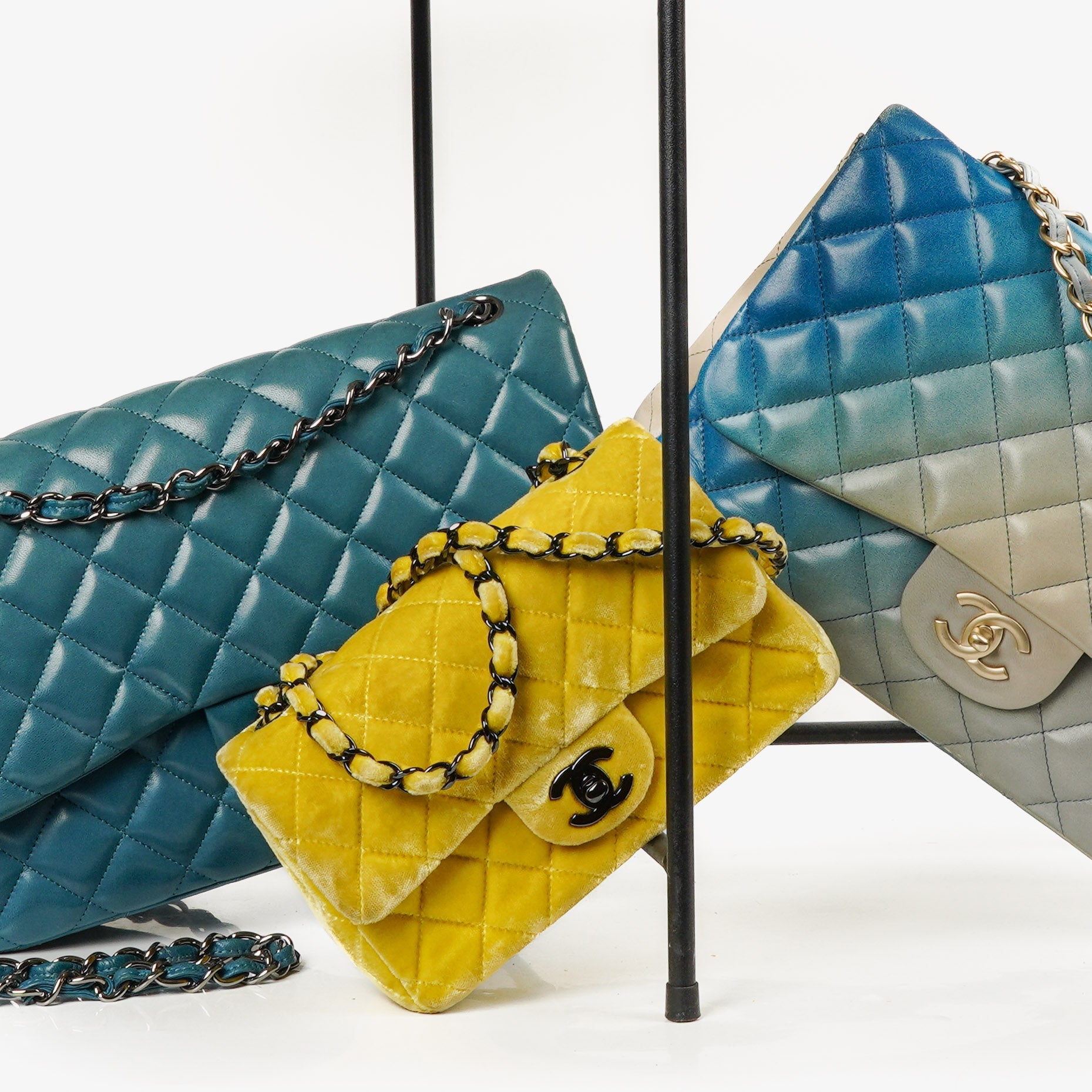
The leather itself. The base note. Old lambskin is the heaviest — rich, full, almost overwhelming. Caviar sits quieter, cooler, with a slightly waxy restraint. Calfskin from a 90s Chanel or a vintage Hermès has a depth that’s almost woody. Each house, each era, each tannery has a signature you can’t quite describe but immediately recognize.

The lining. Fabric linings — particularly the grosgrain or jersey used in vintage Chanel — absorb everything. The interior of a bag is a closed environment for most of its life, and lining holds scent the way fabric always does: completely and faithfully. A vintage 2.55 with a burgundy grosgrain lining carries that interior smell in a way that feels almost intimate.
The previous owner. This is the part that makes people feel something. Because underneath the leather and the lining, there is almost always a trace — faint, impossible to fully name — of whoever carried this bag before you. A particular perfume. Leather gloves. The inside of a coat. Sometimes it’s so subtle you’re not sure you’re really smelling it. But it’s there. And it’s not a flaw. It’s the proof that this object had a life before you.
Storage and time. Bags kept in dust bags in a dark wardrobe for years often develop a particular mustiness — for many pieces faint, more like a library than a basement, and quick to lift with a little air. Bags that traveled have different air in them. Bags that sat in a Paris apartment for twenty years smell like Paris apartments. You probably can’t articulate why, but you feel the difference.

What the Smell Tells You
We’ve learned, over years of handling pre-loved luxury, that smell is one of the most reliable signals a bag can give you — and one of the least discussed.
A bag that smells sharply chemical has often been over-treated — conditioned with cheap products, sprayed with something to mask a problem, or stored improperly in synthetic materials. A bag that smells musty in an unpleasant way has usually been in a humid environment for too long. A bag that has been loved, carried, and properly kept tends to have a smell that’s hard to fake: warm, complex, faintly personal, and entirely itself.

Smell is only ever one signal, though — never something we rely on in place of our full authentication process. When a bag comes to us and smells right, that’s simply one more thing we take seriously. It tells us something about how it was treated long before it arrived.
The Storage Smell — And When It Becomes a Problem
There’s an important distinction worth making, especially if you’re new to buying pre-loved.
What we’ve been describing so far is the natural, layered scent of a bag that has lived. A storage smell is something different. It develops when a bag has been kept in one place for a long time without being used — a result of the surrounding environment, the materials in the wardrobe, the air quality, and the simple absence of regular airing out. It’s not unusual for vintage pieces to carry this. For many bags, it’s faint and fades quickly once the bag gets some air and use again.
In other cases, particularly when a bag has been sealed away for years, the smell can become more pronounced and take longer to settle. When we flag a storage smell in a listing, we mean exactly this: the bag has been stored for an extended period, and that environment has left its mark.

We also want to be honest about something: scent is one of the most subjective senses there is. What feels faint and tolerable to one person can feel strong to another. We can’t smell on your behalf — and we wouldn’t pretend to. What we can do is be transparent and flag it whenever we notice it. And if you’re particularly sensitive to scent, or have any known fragrance sensitivities or allergies, please do reach out to us before ordering — we’re always happy to describe a specific piece in more detail.
For newer pre-loved bags — pieces from the last five to ten years — a storage smell is less expected, and usually a sign the bag sat unused for a significant stretch. In our experience, a storage smell like this reflects how a piece was kept rather than the condition of the leather or structure itself — but it’s still worth knowing about before it arrives at your door.
On Attachment and What We Pass On
We think about this a lot at Plamexs. When we source a bag, we’re not just acquiring a product. We’re receiving something that belonged to someone — that was chosen, carried, set down on restaurant tables and airport floors, filled with a particular person’s particular life. There’s something that accumulates in an object over time that isn’t physical but isn’t nothing either. And when we send that bag to its next owner, something transfers. The leather. The hardware. The smell. The history, faint but present.
That’s not a romantic idea — or not only that. It’s part of what makes pre-loved luxury meaningful in a way that buying new simply isn’t. A new bag has potential. A pre-loved bag has a past. And pasts are worth something.
What Happens to the Smell Over Time
It changes, as it should.
Once a bag comes to you, it begins to pick up your world. Your perfume, your environment, the particular leather of your gloves or jacket, the things you carry inside it. Slowly, gradually, the previous owner’s trace fades and yours begins to take over. The bag becomes yours in the way that things only become yours through use — not ownership, but occupation.
This is the part of pre-loved that nobody tells you about. The bag doesn’t arrive as yours. It becomes yours. And if you carry it long enough, the person who eventually inherits it from you will open the clasp and smell you, faintly, in the lining.
We find that beautiful. We think you will too.
Find Your Next Bag at Plamexs
Every bag in our collection has been handled, assessed, and cared for by people who think about this stuff. We know what a well-kept vintage Chanel smells like. We know the difference between a bag that’s been loved and a bag that’s been neglected. And we only carry pieces that have a story worth continuing.
Browse our current collection at plamexs.com — and if something stops you, trust that instinct. That’s the oldest kind of knowing there is.






















What a Pre-Loved Bag Actually Smells Like — And Why It Matters
The First Thing You Notice When You Open a Pre-Loved Bag
It hits you before you even look inside.
Before you check the stitching, before you run your thumb along the hardware, before you hold it up to the light to read the serial number — there’s a smell. And if you’ve ever held a truly vintage bag, you know exactly what we mean. It’s not quite leather, not quite perfume, not quite time. It’s all three, folded into each other, and it stops you cold.
At Plamexs, we open a lot of bags. Thousands a year. And that first breath — the one that comes when you unclasp a flap that hasn’t been opened in years — never gets old. Because every single one is different.
Why Leather Smells the Way It Does
Leather is not inert. It’s a material that keeps reacting long after it’s been tanned, dyed, and stitched — to temperature, to humidity, to the oils in your hands, to the contents of your bag, to the air in every room it’s ever been in.
Vintage leather — leather from the 1980s, 90s, early 2000s — smells different from leather made today, and not just because it’s aged. The tanning processes used decades ago were different. Many vintage luxury houses used vegetable tanning or chrome tanning methods that have since been updated or replaced.
The Layers You’re Actually Smelling
When you lift a pre-loved bag to your face — and yes, we all do it — what you’re actually encountering is a kind of accidental archaeology.
The leather itself. The base note. Old lambskin is the heaviest — rich, full, almost overwhelming. Caviar sits quieter, cooler, with a slightly waxy restraint. Calfskin from a 90s Chanel or a vintage Hermès has a depth that’s almost woody. Each house, each era, each tannery has a signature you can’t quite describe but immediately recognize.

The lining. Fabric linings — particularly the grosgrain or jersey used in vintage Chanel — absorb everything. The interior of a bag is a closed environment for most of its life, and lining holds scent the way fabric always does: completely and faithfully. A vintage 2.55 with a burgundy grosgrain lining carries that interior smell in a way that feels almost intimate.
The previous owner. This is the part that makes people feel something. Because underneath the leather and the lining, there is almost always a trace — faint, impossible to fully name — of whoever carried this bag before you. A particular perfume. Leather gloves. The inside of a coat. Sometimes it’s so subtle you’re not sure you’re really smelling it. But it’s there. And it’s not a flaw. It’s the proof that this object had a life before you.
Storage and time. Bags kept in dust bags in a dark wardrobe for years often develop a particular mustiness — for many pieces faint, more like a library than a basement, and quick to lift with a little air. Bags that traveled have different air in them. Bags that sat in a Paris apartment for twenty years smell like Paris apartments. You probably can’t articulate why, but you feel the difference.

What the Smell Tells You
We’ve learned, over years of handling pre-loved luxury, that smell is one of the most reliable signals a bag can give you — and one of the least discussed.
A bag that smells sharply chemical has often been over-treated — conditioned with cheap products, sprayed with something to mask a problem, or stored improperly in synthetic materials. A bag that smells musty in an unpleasant way has usually been in a humid environment for too long. A bag that has been loved, carried, and properly kept tends to have a smell that’s hard to fake: warm, complex, faintly personal, and entirely itself.

Smell is only ever one signal, though — never something we rely on in place of our full authentication process. When a bag comes to us and smells right, that’s simply one more thing we take seriously. It tells us something about how it was treated long before it arrived.
The Storage Smell — And When It Becomes a Problem
There’s an important distinction worth making, especially if you’re new to buying pre-loved.
What we’ve been describing so far is the natural, layered scent of a bag that has lived. A storage smell is something different. It develops when a bag has been kept in one place for a long time without being used — a result of the surrounding environment, the materials in the wardrobe, the air quality, and the simple absence of regular airing out. It’s not unusual for vintage pieces to carry this. For many bags, it’s faint and fades quickly once the bag gets some air and use again.
In other cases, particularly when a bag has been sealed away for years, the smell can become more pronounced and take longer to settle. When we flag a storage smell in a listing, we mean exactly this: the bag has been stored for an extended period, and that environment has left its mark.

We also want to be honest about something: scent is one of the most subjective senses there is. What feels faint and tolerable to one person can feel strong to another. We can’t smell on your behalf — and we wouldn’t pretend to. What we can do is be transparent and flag it whenever we notice it. And if you’re particularly sensitive to scent, or have any known fragrance sensitivities or allergies, please do reach out to us before ordering — we’re always happy to describe a specific piece in more detail.
For newer pre-loved bags — pieces from the last five to ten years — a storage smell is less expected, and usually a sign the bag sat unused for a significant stretch. In our experience, a storage smell like this reflects how a piece was kept rather than the condition of the leather or structure itself — but it’s still worth knowing about before it arrives at your door.
On Attachment and What We Pass On
We think about this a lot at Plamexs. When we source a bag, we’re not just acquiring a product. We’re receiving something that belonged to someone — that was chosen, carried, set down on restaurant tables and airport floors, filled with a particular person’s particular life. There’s something that accumulates in an object over time that isn’t physical but isn’t nothing either. And when we send that bag to its next owner, something transfers. The leather. The hardware. The smell. The history, faint but present.
That’s not a romantic idea — or not only that. It’s part of what makes pre-loved luxury meaningful in a way that buying new simply isn’t. A new bag has potential. A pre-loved bag has a past. And pasts are worth something.
What Happens to the Smell Over Time
It changes, as it should.
Once a bag comes to you, it begins to pick up your world. Your perfume, your environment, the particular leather of your gloves or jacket, the things you carry inside it. Slowly, gradually, the previous owner’s trace fades and yours begins to take over. The bag becomes yours in the way that things only become yours through use — not ownership, but occupation.
This is the part of pre-loved that nobody tells you about. The bag doesn’t arrive as yours. It becomes yours. And if you carry it long enough, the person who eventually inherits it from you will open the clasp and smell you, faintly, in the lining.
We find that beautiful. We think you will too.
Find Your Next Bag at Plamexs
Every bag in our collection has been handled, assessed, and cared for by people who think about this stuff. We know what a well-kept vintage Chanel smells like. We know the difference between a bag that’s been loved and a bag that’s been neglected. And we only carry pieces that have a story worth continuing.
Browse our current collection at plamexs.com — and if something stops you, trust that instinct. That’s the oldest kind of knowing there is.